
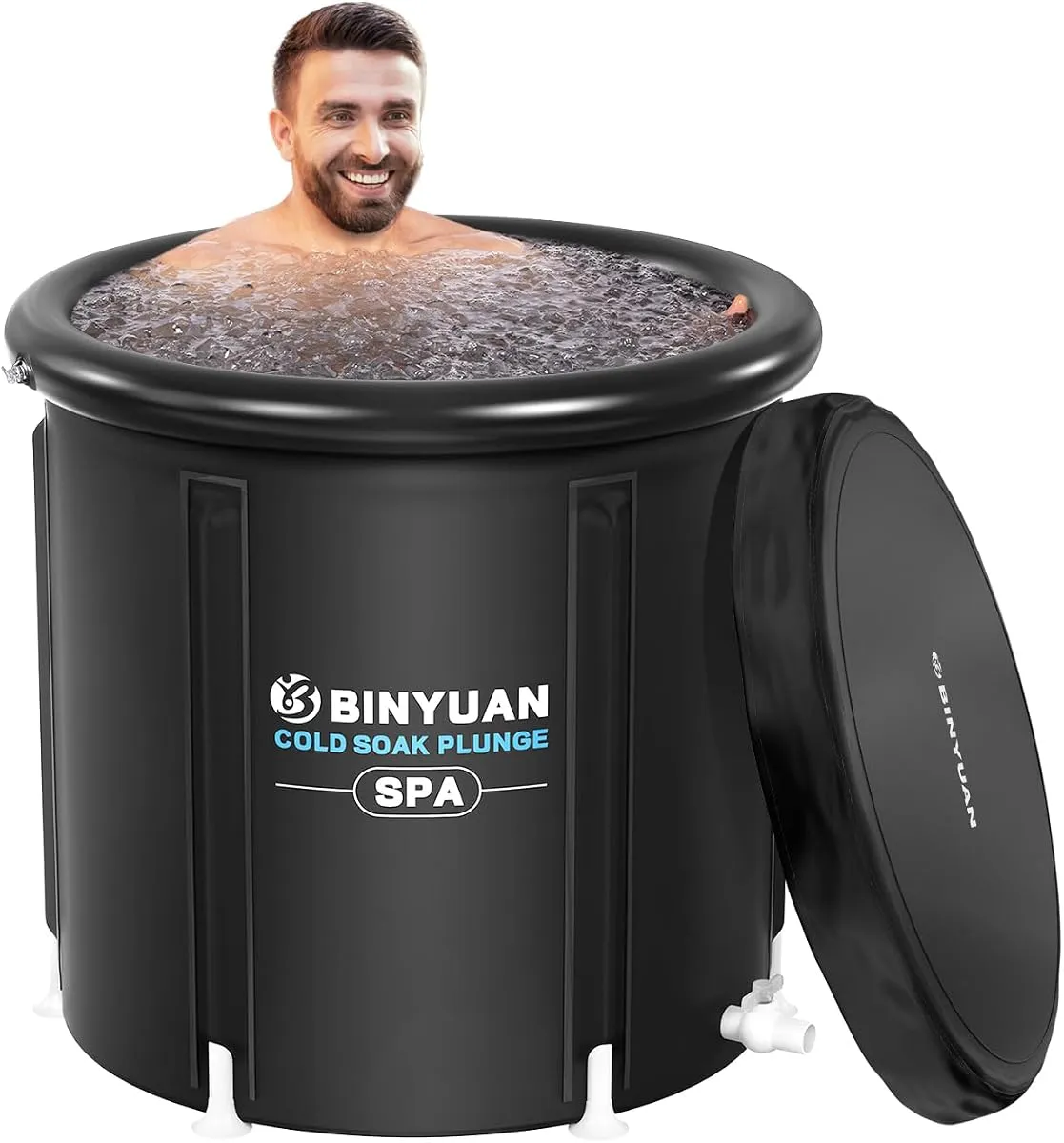
Metal ice baths photograph beautifully and are worse at holding cold than plastic, unless they are insulated. That is the single most counterintuitive fact in this category and it is rarely mentioned.
The reason is simple: metal conducts heat well. A galvanised trough or a bare stainless tub transfers warmth from the room straight into your water. Plastic conducts poorly, which for a cold tub is an advantage.
This page covers what each material actually does, what a soft ice bath's real lifespan is, and why the material fields on listings are so often wrong.
The short version
| Material | Lifespan | Holds cold | Cost | Verdict |
|---|---|---|---|---|
| Layered PVC and polyester | 1 to 3 years | Moderate | Lowest | The sensible default |
| Drop stitch fabric | 3 to 5 years | Good | Mid | Best soft option |
| Rotomoulded polyethylene | Many years | Good insulated | Mid | Best overall |
| Galvanised steel | Many years | Poor bare | Mid | Looks, not performance |
| Stainless steel | Indefinite | Poor bare | Highest | Looks and permanence |
The pattern: metals win on lifespan and lose on thermal performance. Plastics are the reverse of what the price suggests.
Why metal is worse at holding cold
Thermal conductivity. Steel moves heat roughly a thousand times more readily than the polymers used in tubs.
Practically that means the wall of a bare metal tub is barely a barrier at all. Room or air temperature transfers through it into your water almost unimpeded. Plastic resists that transfer, and foam insulated plastic resists it far more.
So a bare galvanised trough at 70 degrees ambient loses cold faster than a layered PVC tub, and much faster than a foam insulated polyethylene one. You pay that difference in ice, every session.
The fix is insulation, not material. An insulated double wall steel tub performs well. A single skin one is a beautiful object with an expensive habit.
If you want the metal look without the ice bill, external insulation on the outside of a trough gets you most of the way for very little money.
Galvanised steel troughs
The aesthetic favourite, and a reasonable choice with eyes open.
Good: they look excellent, they are rigid so a chiller hose fits without flexing, they take knocks, and they are cheap for the size because they are agricultural products.
Bad: high ice use uninsulated. And the galvanising is a coating rather than the metal itself, so once it is scratched the steel underneath can corrode. The waterline is where this usually starts, because that is where wet and dry alternate.
If you buy one: insulate the outside, dry it after draining, and do not scour it. Our tanks page covers the trough option in more detail.
Stainless steel
The premium end. It will outlive you, cleans easily, resists everything, and looks the part, which is why commercial and spa installations use it.
Same thermal caveat, more strongly, because a stainless tub is usually thin sheet. Insist on an insulated double wall construction. A single skin stainless ice bath is the most expensive way to buy the worst cold retention on this page.
Layered PVC and polyester
What most ice baths actually are, and the sensible default.
Good: cheapest by a wide margin, packs away, light. Layered construction resists punctures and holds shape far better than single ply, for very little extra money.
Bad: ultraviolet light. Covered below, because it is the fact that matters most.
Drop stitch
The upgrade worth understanding. Thousands of internal threads connect the inner and outer walls, so when inflated the tub goes genuinely rigid rather than rounding out like a pool toy.
Good: you can grip the rim and lower yourself in without the wall folding, which is where cheap tubs feel worst. Longer lasting, and usually insulated too.
Bad: three times the weight of a basic inflatable and several times the price.
Worth it if the tub gets used most days. Not worth it if you are still deciding whether you like cold water.
The lifespan fact nobody publishes
Soft ice baths are not killed by water. They are killed by sunlight.
Sustained UV exposure makes PVC and nylon brittle. The failure shows up as cracks at fold lines and weeping seams, typically after one to two summers of sitting uncovered on a patio.
The same tub kept covered when not in use, and sited out of direct afternoon sun, lasts considerably longer. Every owner who gets three or four years out of a soft tub is diligent about the cover.
This is why a cover is not an accessory. It protects the material and it holds the cold, and it is the highest return thing you can add to a soft tub.
Material fields on listings are unreliable
A practical warning specific to this category.
Building our product catalog we found soft inflatable tubs whose Amazon material field said stainless steel, cast iron, acrylic and aluminium. All four are impossible for a tub that folds into a bag.
We removed those values rather than publish them, which is why some rows in our comparison tables are shorter than the listings suggest.
How to read them:
- If a folding tub claims a metal or a rigid plastic, the field is wrong.
- “Plastic, Polyester, Polyvinyl Chloride” usually means layered PVC fabric, which is useful to know.
- No material stated at all is common, and it is the spec that predicts lifespan, so its absence counts against the listing.
- If one spec is impossible, distrust the rest. The same listings frequently publish shipping carton dimensions as tub dimensions.
What we would buy
Best overall: foam insulated rotomoulded polyethylene. Best cold retention per dollar and it lasts years outdoors.
Best soft tub: drop stitch, if it gets daily use. Layered PVC if you are still finding out.
If you want the metal look: a galvanised trough with external insulation added, or an insulated double wall stainless tub if budget allows. Never a bare single skin metal tub.
Whatever you buy: get the cover. It extends the material’s life and cuts your ice bill, and on a soft tub it is the difference between two years and four.
Common questions
Is a metal ice bath better than plastic?
Not at holding cold. Metal conducts heat well, so an uninsulated metal tub loses cold faster than plastic and costs more in ice. Metal is better for looks, cleaning and indefinite lifespan. Insulated metal solves the thermal problem at a price.
Do galvanised stock tanks work as ice baths?
Yes, and they are popular because they look good. Expect higher ice use than a plastic tank of the same size, and check the coating: scratched galvanising can corrode where water sits. Adding external insulation largely fixes the thermal side.
How long does a soft ice bath tub last?
One to two summers if left uncovered in the sun, considerably longer if kept covered and shaded. Ultraviolet light is what ends them, not water. This is the fact most buyers do not know.
What is drop stitch and is it worth it?
Internal threads that hold inflatable walls rigid, the same construction as stiff inflatable paddle boards. It costs more, feels far better to climb into, and lasts longer than single ply PVC. Worth it if the tub gets daily use.
Will a metal ice bath rust?
Stainless will not in normal use. Galvanised steel resists corrosion until the coating is scratched or the water is aggressive, and the waterline is where it usually starts. Dry it after draining and avoid abrasive cleaning.
Does material change how cold the water gets?
No. Ice determines the temperature; material determines how fast that cold escapes. An insulated plastic tub reaches the same temperature as a bare steel one and holds it much longer.

Written by
Jed Callahan
Editor, Cold Plunge Daddy
I have spent more nights than I want to admit doing math on ice bath listings to find out whether the gallon number is a lie. It usually is. I have been in some of this gear and not all of it, and I always tell you which. I am not a doctor, and I am not going to pretend cold water fixed my life.
- Catching bad spec sheets
- Chiller sizing and power draw
- Warranty and return terms
- What a tub costs to run