
A home cold plunge is a different purchase to a portable one. It lives in one place, it stays outside, and it should not need replacing in two years.
That pushes you toward rigid insulated tubs, which cost roughly ten times what a soft tub does and cost far less to run. Whether that maths works depends entirely on how often you actually get in.
We compared 10 permanent tubs on insulation, footprint, seated water depth and whether a chiller can be added cleanly. We have not filled these, and each pick says what we could not confirm.
Three made the page.
Watch: Best Overall, the Frozin 400 Cold Plunge Tub
The short answer
Every pick below wins one job. Find the line that sounds like you, then jump to the full write-up.
-
Best Overall
Frozin 400 Cold Plunge Tub
Someone who has proved the habit sticks and wants a tub that will not need replacing, with room to sit properly.
Check price on Amazon for Frozin 400 Cold Plunge Tub (opens in a new tab) Typically $800 to $2,000Read why it won for Frozin 400 Cold Plunge Tub -
Best Depth
Ice Cap Vertical Cold Plunge Tub
Someone who wants full shoulder immersion, a permanent hard tub, and cannot give up the floor space a wide tub needs.
Check price on Amazon for Ice Cap Vertical Cold Plunge Tub (opens in a new tab) Typically $800 to $2,000Read why it won for Ice Cap Vertical Cold Plunge Tub -
Best for Small Spaces
Ice Barrel 300
A permanent home setup where floor space is the binding constraint rather than budget, and the tub has to live in a corner.
Check price on Amazon for Ice Barrel 300 (opens in a new tab) Typically $800 to $2,000Read why it won for Ice Barrel 300
Compare them side by side
Same fields for every tub, so you are comparing like with like.
| Product | Award | Best for | Capacity | Material | Shape | Price | Where to buy |
|---|---|---|---|---|---|---|---|
| Frozin 400 Cold Plunge Tub | Best Overall | Someone who has proved the habit sticks and wants a tub that will not need replacing, with room to sit properly. | 100 gallons | Low Density Polyethylene (LDPE) | Rectangular | $$$ $800 to $2,000 | Check price for Frozin 400 Cold Plunge Tub (opens in a new tab) |
| Ice Cap Vertical Cold Plunge Tub | Best Depth | Someone who wants full shoulder immersion, a permanent hard tub, and cannot give up the floor space a wide tub needs. | 100 gallons | Food Safe Resin | Cylindrical | $$$ $800 to $2,000 | Check price for Ice Cap Vertical Cold Plunge Tub (opens in a new tab) |
| Ice Barrel 300 | Best for Small Spaces | A permanent home setup where floor space is the binding constraint rather than budget, and the tub has to live in a corner. | 77 gallons | Low Density Polyethylene (LDPE) | Cylindrical | $$$ $800 to $2,000 | Check price for Ice Barrel 300 (opens in a new tab) |
Not shown because at least one product does not publish it: Dimensions, Weight.
The full reviews
Best Overall
Frozin 400 Cold Plunge Tub
Frozin 400
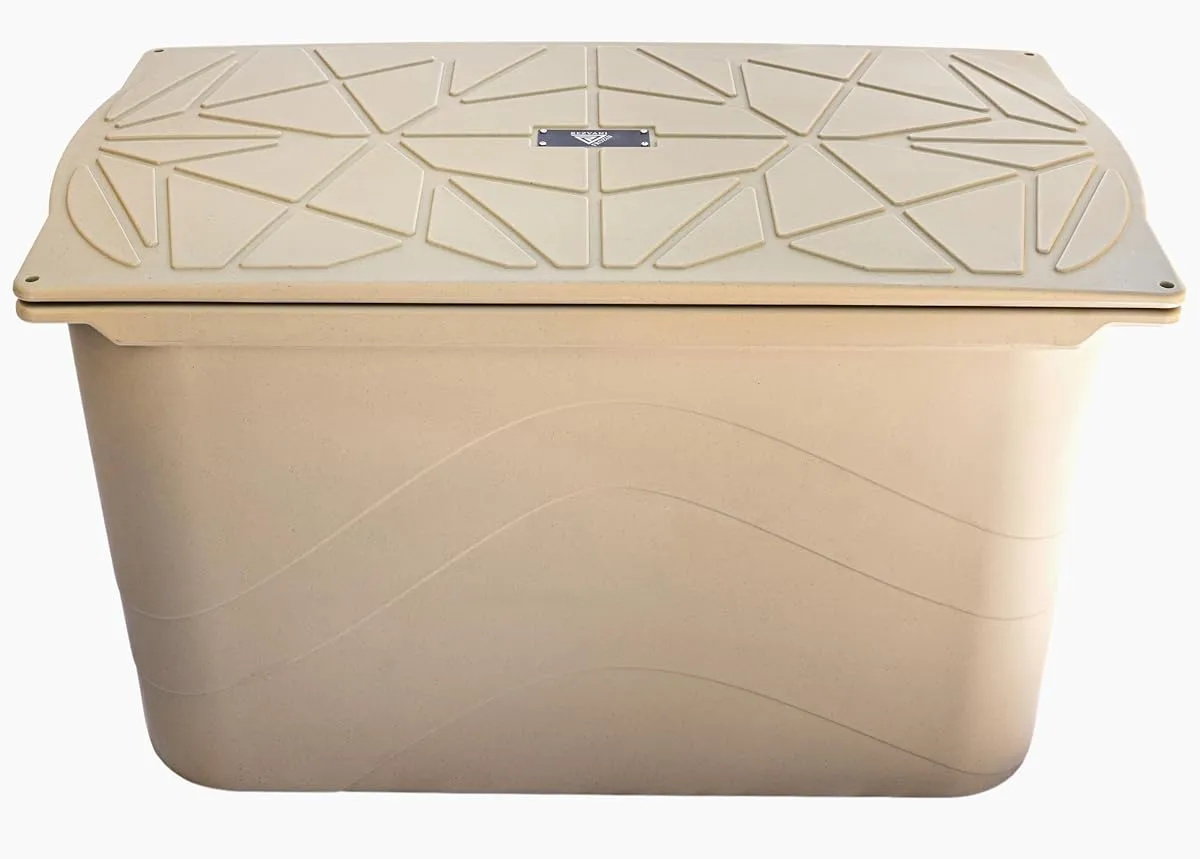
A 100 gallon rotomoulded tub with foam insulation and a fitted lid. Ice survives overnight, which halves the running cost, and it will still be usable in five years.
What we like
- Foam insulated rotomoulded shell, so ice retention is in a different class to PVC
- 48 inch width lets most adults sit with legs extended rather than folded
- Rigid shell handles sun, frost and permanent outdoor life
- Fitted lid included, which is what makes the insulation pay off
What we do not
- 90 pounds empty, so siting it is a two person job and a permanent decision
- Roughly ten times the price of a capable inflatable tub
- No chiller included, so a chilled setup costs meaningfully more again
Key specs
- Capacity
- 100 gallons
- Dimensions
- 28"L x 48"W x 28"H
- Weight
- 90 pounds
- Material
- Low Density Polyethylene (LDPE)
- Shape
- Rectangular
- Price range
- $800 to $2,000
This is where a cold plunge stops being equipment you set up and becomes part of the garden.
What the shell buys you
Rotomoulded LDPE with foam insulation is cooler construction, and it behaves like a cooler. Soft sided PVC loses cold through a single thin wall. This does not.
Owners consistently report ice surviving overnight and into a second day with the lid on. We have not measured that, but the reports are consistent and the physics is straightforward.
That changes the economics. If one ice load covers two sessions instead of one, you have halved the running cost that makes cheap tubs expensive.
The shape
48 inches wide by 28 deep is a sit-and-extend tub rather than a sit-upright one. That suits most adults better than a 29 inch barrel, though much over six feet you will still be somewhat folded.
What 90 pounds means
Empty it takes two people to place. Full it is going nowhere.
Decide where it lives before it arrives, and think about drainage while you are at it. Emptying 100 gallons somewhere useful is a question worth answering in advance.
The freeze warning
This is the drawback that matters. Water expands when it freezes, and a sealed rigid shell full of freezing water is how expensive tubs crack.
If you are somewhere that goes properly below freezing, draining before a hard freeze has to become a habit. Soft sided tubs fail more often but fail cheaply. This one rarely fails and fails expensively.
Against the alternatives
Compared with a good insulated inflatable you are paying roughly ten times as much. What you get is a tub that keeps ice far longer, does not care about weather, and will not need replacing.
Good trade if you plunge several times a week and have somewhere to put it. Poor trade if you are still finding out whether you like this.
Buy it if Someone who has proved the habit sticks and wants a tub that will not need replacing, with room to sit properly.
Skip it if You are new to cold plunging, you rent, or you are not certain where the tub will live permanently.
The catch Rotomoulded LDPE is durable but not practically repairable. If the shell cracks from a hard freeze with water left in it, there is no patch kit outcome, and at this price that means draining before deep freezes has to become a habit rather than an intention.
Not tested by us. Specs checked July 25, 2026. How we research
Best Depth
Ice Cap Vertical Cold Plunge Tub
Ice Cap IC.TUB.MOO
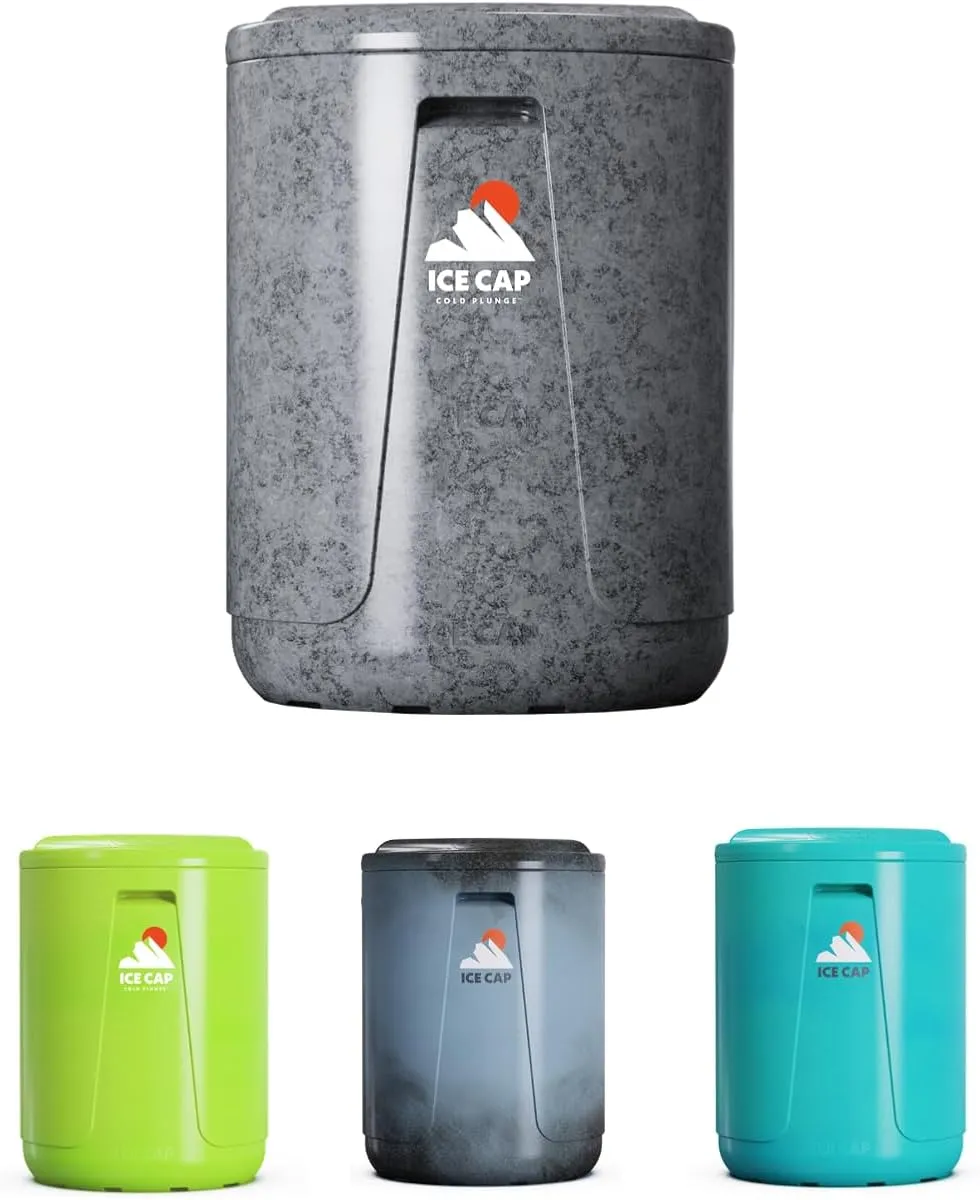
100 gallons at 40 inches tall on a 29 inch square footprint. The only tub here that gets water over your shoulders while seated, and it does it in a corner.
What we like
- 40 inch height puts water over the shoulders seated, which round tubs rarely manage
- 29 by 29 inch footprint fits balconies and garage corners
- Food safe resin shell handles weather far better than PVC
- Built in step and internal bench, so getting in is not a scramble
What we do not
- 47 pounds and rigid, so it does not pack away between sessions
- No chiller included at a price where some competitors bundle one
- Vertical shape means you cannot stretch your legs at all
Key specs
- Capacity
- 100 gallons
- Dimensions
- 29"L x 29"W x 40"H
- Weight
- 47 pounds
- Material
- Food Safe Resin
- Shape
- Cylindrical
- Price range
- $800 to $2,000
Someone else's Ice Cap Vertical Cold Plunge Tub review
Watch "Ice Cap Cold Plunge Tub Review - Ryan Humphries of Engearment.com" on YouTube
Most tubs make you choose between depth and footprint. This one refuses to.
What 40 inches of height does
In a typical 29 inch round tub, seated water sits around mid chest. Here it can sit over the shoulders while you are on the internal bench.
For a lot of people that is the difference between a proper plunge and a cold sit, and it is the single most common complaint about tubs that are otherwise fine.
The built in step is not a gimmick either. Climbing into a 40 inch tub without one is genuinely awkward, and it is the moment where people slip.
The footprint
29 by 29 inches is roughly a dining chair. A tub holding 100 gallons lying down would need close to five feet of length.
If your constraint is floor area rather than volume, that is exactly the trade you want.
What you give up
Everything about this tub is vertical. You cannot extend your legs, you cannot lie back, and if that position does not suit you there is no way to adapt it.
Try sitting on a low stool with your knees up for three minutes before you commit.
It also does not go away. 47 pounds of rigid resin is not something you stash between sessions. Compared with a soft tub you are trading flexibility for durability and depth.
No chiller at this price
This sits in a price band where some competitors bundle a chiller. It does not include one. If you want chilled water, you are buying that separately, which pushes the real total well past the sticker price.
Factor that in when comparing against the bundles, because a tub plus a separate chiller is often more than a matched kit.
Buy it if Someone who wants full shoulder immersion, a permanent hard tub, and cannot give up the floor space a wide tub needs.
Skip it if You want to lie back, or the space has another job and the tub has to disappear between sessions.
The catch It is a permanent object. At 47 pounds with a rigid shell it does not fold, deflate or go in a cupboard, so the corner you choose is gone for good. Renters should think hard before buying.
Not tested by us. Specs checked July 25, 2026. How we research
Best for Small Spaces
Ice Barrel 300
Ice Barrel Black Ib/300/Syn/Bl/Bar
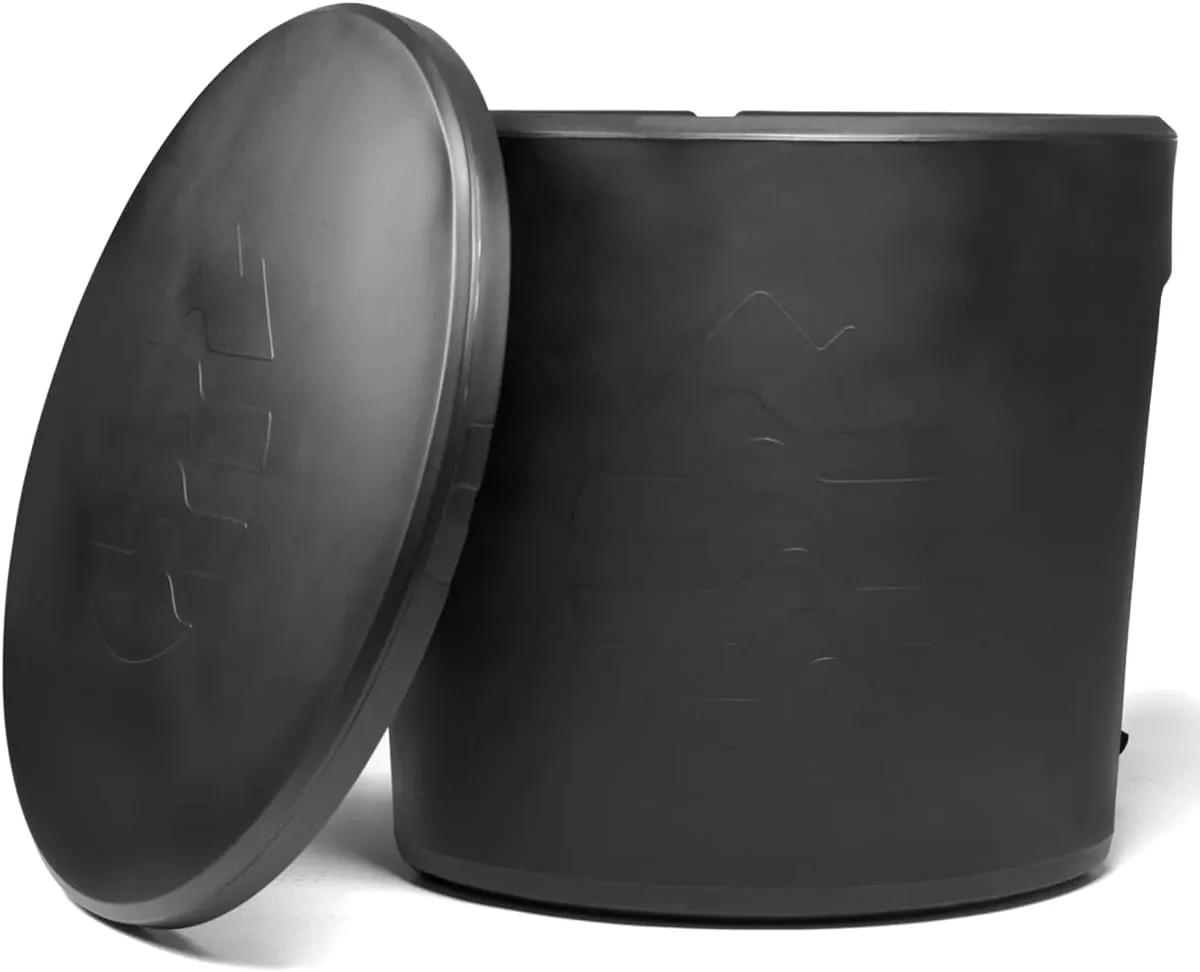
77 gallons on a footprint about the size of a dining chair. The upright barrel is the answer when you want something permanent and have no floor area to give it.
What we like
- Cylindrical footprint fits corners, balconies and garages where wide tubs cannot
- Rotomoulded LDPE shell handles sun, frost and being left outdoors year round
- Built in chiller ports, so adding one later is a designed-for operation
- Established brand with a real warranty and parts availability
What we do not
- You plunge sitting upright with knees bent, always, with no way to adapt it
- Listing publishes no dimensions or weight, so siting it is guesswork before delivery
- 77 gallons is modest, so two people cannot use it back to back comfortably
Key specs
- Capacity
- 77 gallons
- Material
- Low Density Polyethylene (LDPE)
- Shape
- Cylindrical
- Price range
- $800 to $2,000
Someone else's Ice Barrel 300 review
Watch "Ice Barrel 300 Review: Watch Before You Buy This Cold Plunge!" on YouTube
The usual answer to “I have no space for a cold plunge” is a tub that folds away. This is the other answer: build upward instead of outward.
The footprint argument
77 gallons in a cylinder occupies roughly the floor area of a dining chair. A tub holding the same volume lying down needs several feet of length.
If your constraint is floor space rather than volume, that trade is worth making, and this is the category’s established product for it.
Built to stay outside
Rotomoulded low density polyethylene is the same construction as a good cooler, and it behaves like one. It handles sun, frost and years of weather in a way no soft sided tub does.
The chiller ports are built in rather than retrofitted, which means adding a chiller later is a designed operation rather than a modification. That is worth more than it sounds, because retrofitting hoses is where people create leaks.
What you give up
Posture, entirely. You sit upright with your knees bent and there is no version of this tub where you do anything else.
Some people find that fine and some find it unbearable over three minutes. Try sitting on a low stool with your knees up before you spend four figures finding out.
77 gallons is also modest for a permanent tub. Two people taking turns will find the second session noticeably warmer.
The specs it does not publish
No dimensions and no empty weight. For a permanent installation those are the two things you most need before delivery: whether it fits the corner you picked, and whether you can position it alone.
We left both out of our comparison rather than guess. Measure your space generously and plan for help on delivery day.
Buy it if A permanent home setup where floor space is the binding constraint rather than budget, and the tub has to live in a corner.
Skip it if You want to lie back or stretch your legs, because an upright barrel offers no version of that.
The catch Everything about this tub is vertical. You cannot extend your legs and you cannot adapt the posture. Sit on a low stool with your knees up for three minutes before committing, because that is the position you are buying.
Not tested by us. Specs checked July 25, 2026. How we research
How we compared these tubs
Ten permanent tubs, then four tests.
Does it actually insulate? This is the whole argument for a hard tub. Foam insulated rotomoulded shells hold ice overnight. Thin rigid shells do not, and both are sold as hard sided tubs.
Footprint against seated depth. The interesting question is not how big the tub is, it is how much water sits above your shoulders per square foot of floor given up.
Are chiller ports built in? On a permanent tub you will probably add a chiller eventually. Built in ports make that clean. Retrofitting is where leaks come from.
Freeze resistance. A rigid shell full of freezing water is how expensive tubs crack.
The three shapes, and who each suits
Permanent tubs come in three forms and the choice is mostly about your body and your space.
Wide and shallow. Around 48 inches across, 28 deep. You sit with legs extended. Most comfortable for most people, needs the most floor area.
Upright barrel. Around 29 inches across, tall. You sit vertically with knees up. Smallest footprint by a wide margin, and the posture suits some people and not others.
Tall vertical with a bench. Around 29 inches across, 40 tall. Same small footprint, but the extra height gets water over your shoulders, which a barrel of the same width usually cannot.
Try the posture before you buy the tub. Sit on a low stool with your knees up for three minutes. If that is uncomfortable dry, it will not improve at 52 degrees.
Insulation versus a chiller
Do not treat these as alternatives. They solve different problems.
Insulation makes the cold you already paid for last longer. On a lidded insulated tub, one ice load can cover two sessions.
A chiller removes ice from your life entirely and holds a set temperature.
The cheapest sensible home setup is an insulated tub with a lid and bagged ice. The cheapest setup that removes all friction is an insulated tub with a chiller. An uninsulated tub with a chiller is the worst combination, because the chiller spends its life fighting the walls.
The practical questions people skip
Drainage. You will empty this periodically. Site it where 100 gallons can go somewhere.
Power. If a chiller is ever likely, you need a proper outdoor rated socket nearby. Installing one later can cost more than the chiller.
Delivery and placement. A 90 pound shell is a two person job, and once it is full it is not moving. Pick the spot properly.
Freezing. In a cold climate, draining before a deep freeze needs to become routine.
Our final recommendation
For most people with the space, the Frozin 400 is the right home tub. Foam insulated, lidded, wide enough to sit properly, and built to stay outside for years.
If floor space is the constraint but you still want water over your shoulders, the Ice Cap vertical is the better answer, because 40 inches of height on a 29 inch footprint is a trade nothing else here offers.
Choose the Ice Barrel if you want the established brand and built in chiller ports, and you are comfortable with an upright posture in a smaller volume.
And if you are not yet certain the habit will stick, buy none of these. Spend under $300 on a soft tub, find out, and come back with better information about what you actually need.
How we researched this page
We compared 10 permanent home tubs on insulation and ice retention, footprint against seated water depth, whether chiller ports are built in, and freeze resistance, then dropped anything without published capacity and material.
What we worked from
- Manufacturer spec sheets
- Brand manuals and setup docs
- Verified owner reports
- Warranty terms
- Price history
10 units were compared before these 3 made the page.
What we handled ourselves
None of the products on this page. Nobody can buy every tub on the market and we are not going to pretend otherwise.
What we could not confirm, product by product
- Frozin 400 Cold Plunge Tub
- Insulation performance is the brand's claim. Owner reports describe multi-day ice retention but we found no controlled measurement, and we could not confirm the warranty position on freeze damage.
- Ice Cap Vertical Cold Plunge Tub
- Only a small number of owner reports exist for this model, so our read on long term shell durability is weaker than for the higher volume tubs. We could not confirm the resin's UV rating.
- Ice Barrel 300
- The listing publishes neither dimensions nor an empty weight, so we cannot tell you the footprint or whether one person can move it. Both are unusual omissions for a permanent installation.
Questions people ask before they buy
Is a hard sided tub worth ten times the price of an inflatable?
If you plunge several times a week and have somewhere permanent to put it, yes, because insulation cuts your ice cost every session and the tub will not need replacing. If you plunge once a week or are still unsure, no.
Can a home cold plunge stay outside all year?
Rigid tubs can. The risk is not cold air, it is water left in the shell through a hard freeze, which can crack it. Drain before deep freezes, and know that this damage is often not covered.
Do I need a chiller for a home tub?
Not necessarily. An insulated tub with a lid can hold ice temperature into a second day, which halves the ice cost. A chiller removes ice entirely and makes sense above roughly three to four sessions a week.
How much space does a home cold plunge need?
Less than you think if you go vertical. An upright barrel occupies about the floor area of a dining chair. A wide tub you can extend your legs in needs four to five feet of length plus access.
Indoor or outdoor?
Outdoor is simpler. Indoors you need a floor that tolerates 800 pounds of water, a drainage plan, and ventilation, because a cold tub in a warm room produces condensation.
What about drainage?
Answer this before delivery. You will empty 80 to 100 gallons periodically, and somewhere it has to go. A tub sited far from a drain becomes a chore, and chores are what end the habit.
Why you can trust this page
- Who wrote it
- Jed Callahan, Editor, Cold Plunge Daddy
- When
- Published July 25, 2026, updated July 25, 2026
- How we picked
- We compared 10 permanent home tubs on insulation and ice retention, footprint against seated water depth, whether chiller ports are built in, and freeze resistance, then dropped anything without published capacity and material.
- What we looked at
- 3 products made this page after the cut.
- How we make money
- Amazon pays us a small commission when you buy through our links. Nobody pays us for a good review and no brand sees a page before it goes live.
- What we do not do
- We do not run these tubs ourselves, so we never claim we did. Every pick here comes from spec sheets, manuals, warranty terms and owner reports, and each review says what we could not check.

Written by
Jed Callahan
Editor, Cold Plunge Daddy
I have spent more nights than I want to admit doing math on ice bath listings to find out whether the gallon number is a lie. It usually is. I have been in some of this gear and not all of it, and I always tell you which. I am not a doctor, and I am not going to pretend cold water fixed my life.
- Catching bad spec sheets
- Chiller sizing and power draw
- Warranty and return terms
- What a tub costs to run