
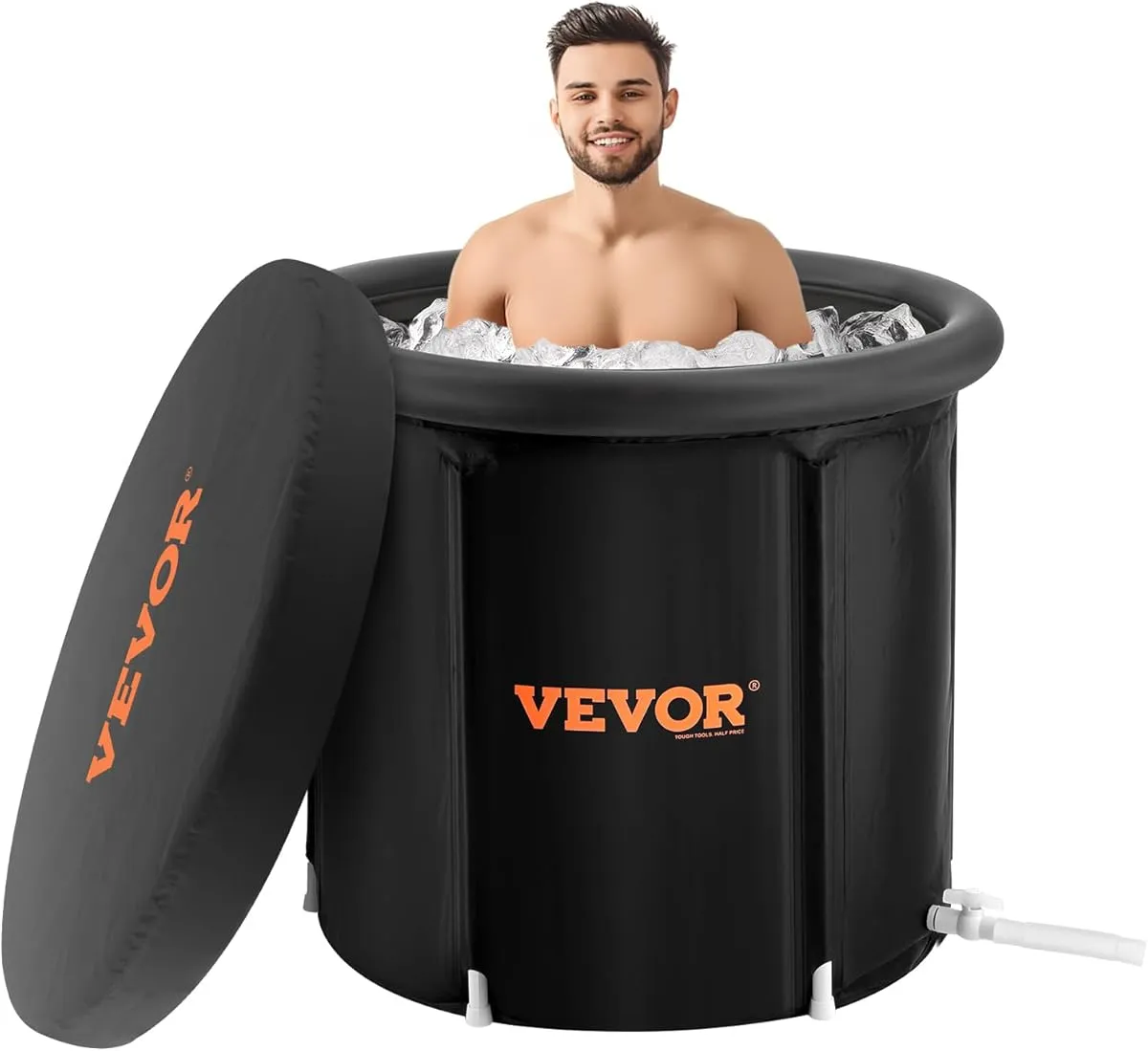
An ice bath is cold water immersion where the cold comes from ice rather than a machine. That is the only real difference between an ice bath and a cold plunge, and in home use the words are interchangeable.
What matters practically is that ice is a running cost. Every session needs more of it, and most people underestimate how much.
This page covers the numbers: how much ice, how cold, how long, and when it stops making sense to keep buying bags.
How much ice you actually need
This is the number nobody puts on a product page, so here it is.
To take a tub of water from typical tap temperature down to the low 50s Fahrenheit, you are looking at roughly 20 to 40 pounds of ice per 100 gallons.
Where you land in that range depends on three things:
- Your tap water temperature. Winter tap water might arrive in the 50s already. Summer tap water can be in the 70s, and every extra degree costs ice.
- Air temperature. Ice melts to cool the water and then keeps melting to fight the air.
- Whether the tub is insulated. An uninsulated tub loses cold continuously through the wall, so you keep paying.
Scale it up honestly. A 216 gallon tub needs roughly double. That is why big tubs and bagged ice are a bad combination.
The running cost, done properly
At four sessions a week and 30 pounds of ice a session, you are buying around 120 pounds of ice a week. Price that at your local rate and multiply by 52.
For most people the answer lands somewhere between “noticeable” and “more than a chiller would have cost”. That is the calculation that should decide whether you buy a chiller, and almost nobody does it before buying a tub.
Making the ice cheaper
Three things genuinely help.
Insulate and cover. The single biggest lever. A covered insulated tub holds cold overnight, which means one ice load can cover two sessions instead of one.
Freeze your own. Large reusable containers of frozen water, sometimes sold as ice blocks or made from bottles, melt slower than crushed ice and cost nothing but freezer space and electricity. Slower melt is what you want.
Do not overfill. You only need water up to your shoulders when seated. Every extra inch is water you are paying to cool for no benefit.
Temperature and time
50 to 59 degrees Fahrenheit, two to five minutes. That is the working range and almost all protocols sit inside it.
Colder water does not obviously produce a better outcome and it does shorten how long you can stay in safely. There is no prize for 38 degrees.
If you are new, start at the warm end for under a minute. The first 30 seconds is a breathing problem rather than a cold problem, and once you can control the initial gasp everything else becomes manageable.
How to take one at home
- Fill first, ice second. Fill to the level that will cover your shoulders when seated, then add ice and stir.
- Check the temperature. A cheap floating thermometer removes all guesswork and stops you either wasting ice or going colder than intended.
- Get in slowly, exhale as you do. Do not jump, do not go head first.
- Control the breathing for the first minute. Longer out than in.
- Get out before you shiver uncontrollably. Uncontrolled shivering means you are past the useful point.
- Warm up passively. Dry off and put clothes on. A hot shower straight after is pleasant but it undoes some of the effect.
Bathtub versus dedicated tub
A bathtub is the cheapest start and it works. It holds 40 to 60 gallons so it needs less ice, and you already own it.
Two things push people to a dedicated tub. Most bathtubs are too short to get your shoulders under while seated, and you cannot leave a bathtub set up, which means every session starts with filling and ends with draining. That friction is what stops people.
If you have used a bathtub a dozen times and you are still doing it, a proper tub is a reasonable purchase. Our comparison covers what to get.
Water care
Ice does not sanitise anything. If you reuse water, you need a plan.
With no filtration, drain and refill weekly. With a filter and a sanitiser you can stretch that to several weeks. Water that has gone cloudy or smells is past due regardless of what the schedule says.
Safety
Cold water immersion is a real physical stressor. It spikes heart rate and blood pressure at the same time, and it triggers an involuntary gasp on entry.
Never go in head first. Never plunge alone until you are confident. Never after drinking. If you have a heart condition, high blood pressure, or you are pregnant, speak to a doctor first.
We are not doctors and this is not medical advice.
Common questions
How much ice do I need for an ice bath?
For a 100 gallon tub starting at typical tap temperature, plan on 20 to 40 pounds to reach the low 50s Fahrenheit. Warmer tap water, warmer air, or an uninsulated tub all push you toward the top of that range.
What temperature should an ice bath be?
Between 50 and 59 degrees Fahrenheit for most purposes. Colder is not better, it just shortens how long you can safely stay in and raises the risk.
How long should I stay in an ice bath?
Two to five minutes at 50 to 59 degrees. Beginners should start at 30 to 60 seconds. Getting out early is never a failure.
Should I take an ice bath before or after a workout?
If you lift for size or strength, not straight after. Cold immersion right after resistance training appears to blunt the adaptation. Leave several hours, or use rest days. For endurance athletes who need to perform again tomorrow, straight after can be the right call.
Can I just add ice to my bathtub?
Yes, and it is the cheapest way to start. A standard bathtub holds 40 to 60 gallons, so you need less ice than a dedicated tub. The downsides are that you cannot leave it set up and most bathtubs are too short to get your shoulders under.
When does a chiller become worth it?
Around three to four sessions a week. Below that, ice is cheaper. Above it, the annual ice cost usually exceeds the price of a mid range chiller, and the chiller also removes the friction that makes people quit.

Written by
Jed Callahan
Editor, Cold Plunge Daddy
I have spent more nights than I want to admit doing math on ice bath listings to find out whether the gallon number is a lie. It usually is. I have been in some of this gear and not all of it, and I always tell you which. I am not a doctor, and I am not going to pretend cold water fixed my life.
- Catching bad spec sheets
- Chiller sizing and power draw
- Warranty and return terms
- What a tub costs to run