
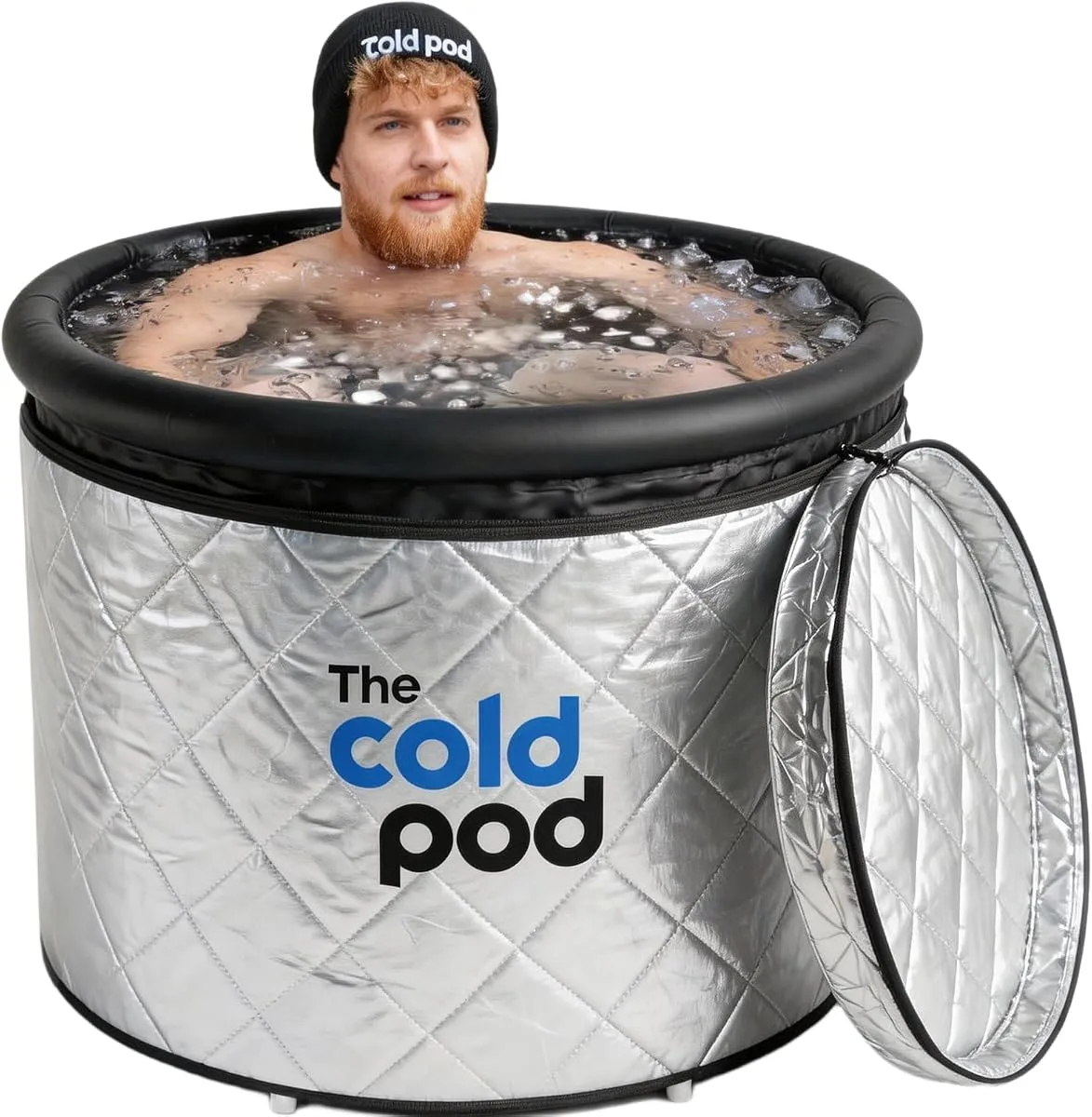
A cold plunge is sitting in cold water on purpose, usually somewhere between 50 and 59 degrees Fahrenheit, usually for two to five minutes.
That is the whole thing. Everything else is detail: how you get the water cold, how long you stay, and whether it does what people claim.
This page covers the detail. It is written for someone deciding whether to start, not someone looking for a reason to feel good about starting.
What a cold plunge actually is
Cold water immersion. You get into water cold enough to make your body work to stay warm, and you stay there long enough for that to mean something.
The temperature band most people use is 50 to 59 degrees Fahrenheit, roughly 10 to 15 Celsius. Below about 50 the risk climbs faster than any benefit. Above about 60 the water stops being cold enough to do much.
Duration is two to five minutes. Longer is not better. The people doing 20 minute sessions are doing something different, with different risks.
What happens to your body
The immediate response is well understood and not in dispute.
Cold water on skin triggers a sharp inhale, then rapid breathing. Your blood vessels constrict, pushing blood inward. Heart rate and blood pressure spike. Adrenaline and noradrenaline rise sharply.
That first 30 seconds is the hardest part, and it is mostly a breathing problem rather than a cold problem. Learning to control the gasp is the single skill that makes cold plunging manageable.
After you get out, blood returns to the skin and most people feel a strong lift in mood and alertness that lasts a few hours. That part is real and it is the reason most people keep doing it.
What the evidence supports, and what it does not
This is where most cold plunge content becomes useless, so here is the honest summary.
Reasonably well supported: cold immersion reduces perceived muscle soreness after hard exercise, and it produces a large short term rise in noradrenaline which tracks with the mood lift people report.
Mixed or weak: claims about fat loss, immune function and testosterone. The studies are small, short, and often measure something narrower than the claim being made.
Actively works against you in one case: cold immediately after resistance training appears to reduce muscle growth and strength adaptation over time. If you lift to get bigger or stronger, do not plunge straight after your session.
We cover the research in more detail on our benefits page.
How to start
Your first week
Water at 55 to 60 degrees. In for 30 seconds. Out. That is a complete session.
The goal in week one is not endurance, it is learning that you can control your breathing in cold water. Once the initial gasp stops controlling you, everything else gets easier.
Breathing
Before you get in, take a few slow breaths. As you enter, exhale slowly rather than gasping in. Then breathe out longer than you breathe in for the first minute.
If you cannot control your breathing, the water is too cold or you went in too fast. Both are fixable.
Building up
Add 15 to 30 seconds a session, or drop the temperature a couple of degrees, but not both at once. Most people reach a comfortable two to three minutes at 50 to 55 degrees within a month.
There is no reason to go beyond that unless you want to.
When to stop a session
Get out if you start shivering uncontrollably, if you lose feeling in your hands or feet, or if you cannot get your breathing under control. None of those are badges of honour.
Getting the water cold
Two options, and the choice is about frequency rather than budget.
Ice. Cheap per session, expensive per year. A 100 gallon tub at room temperature needs roughly 20 to 40 pounds of ice to reach the low 50s. Fine at one or two sessions a week.
A chiller. Expensive once, then close to free. It holds the water at a set temperature so it is ready whenever you are.
The crossover is around three to four sessions a week. Below that, buy ice. Above that, the chiller is genuinely the cheaper option, and it also removes the main reason people quit: the friction of hauling ice.
Our chiller guide covers sizing, which is the part people get wrong.
What it costs
A usable soft sided tub starts under $300. An insulated one runs a bit more and costs less to run. A hard sided tub that lives outdoors permanently runs into four figures.
Add a chiller and you are looking at several hundred to well over a thousand, depending on how much water you need to cool.
Then there are the running costs nobody budgets for: ice, water treatment, filter replacements, and electricity if you run a chiller continuously. We break the numbers down on our cost page.
Safety, plainly
Cold water immersion is a real physical stressor, not a wellness ritual with no downside.
The gasp reflex is the acute danger. An involuntary inhale underwater is how people drown in cold water. Never enter head first, never plunge alone until you are confident, and never after drinking.
The cardiovascular load is the other one. Cold immersion spikes heart rate and blood pressure at the same time. If you have any heart condition, high blood pressure, or you are pregnant, talk to a doctor before you start. We are not doctors and this page is not medical advice.
Where to go next
If you have decided you want one, our tub comparison is the practical next step. If you are still deciding whether any of this is worth it, read the benefits page first, because it is more sceptical than most.
Common questions
How cold does a cold plunge need to be?
Most people work between 50 and 59 degrees Fahrenheit. That range is cold enough to produce the response people are after and warm enough to stay in safely for a few minutes. Going colder does not obviously improve the result and it raises the risk.
How long should I stay in?
Two to five minutes at 50 to 59 degrees is where most protocols land. If you are new, start at 30 to 60 seconds and build up. Getting out early is never a failure.
Is a cold shower the same thing?
No. A shower only cools the skin it touches and rarely gets below the low 60s. Immersion surrounds you and pulls heat far faster. A cold shower is a reasonable way to find out whether you tolerate cold, not a substitute.
Do I need a chiller?
Only if you plunge often. Ice works fine once or twice a week. At four or more sessions a week, the ice cost usually passes the price of a mid range chiller inside a year.
Can cold plunging be dangerous?
Yes. Cold water immersion stresses the heart and can trigger an involuntary gasp reflex. Anyone with a heart condition, high blood pressure, or who is pregnant should talk to a doctor first. Never plunge alone if you are new to it, and never after drinking.
What time of day is best?
Whenever you will actually do it. If you lift and your goal is muscle growth, leave several hours between training and plunging, because cold immediately after resistance training appears to blunt some of the adaptation.

Written by
Jed Callahan
Editor, Cold Plunge Daddy
I have spent more nights than I want to admit doing math on ice bath listings to find out whether the gallon number is a lie. It usually is. I have been in some of this gear and not all of it, and I always tell you which. I am not a doctor, and I am not going to pretend cold water fixed my life.
- Catching bad spec sheets
- Chiller sizing and power draw
- Warranty and return terms
- What a tub costs to run