
Pairing a sauna with a cold plunge is the setup most people eventually want, and it is the version of cold water practice that people stick with longest.
The reason is simple: the sauna makes the cold bearable. Facing 52 degree water from a warm body is a completely different experience to facing it cold.
This page covers the order, the timing, how many rounds, what it costs to run both, and how to build toward it without spending five figures up front.
Why the pairing works
Cold water on its own has an adherence problem. It is unpleasant, the benefit is mostly a mood lift a few hours later, and plenty of people quit inside a month.
Adding a sauna changes the experience rather than the physiology. You go into the cold warm, you come out into warmth again, and the session becomes something you look forward to rather than endure.
That is not a small thing. A protocol you keep doing beats a better protocol you abandon, and this is the version people keep doing.
The order question, settled
Sauna first. There is no serious argument for the reverse in a contrast session.
Going hot first is more comfortable, it loosens you up, and cold water lands significantly better on a warm body. Anyone who has tried cold-first in winter knows why.
The only case for plunging first is if you are not doing contrast at all, and are using cold purely to wake up before a separate sauna session.
The protocol
Sauna: 10 to 15 minutes. Long enough to be properly warm and sweating. Not so long that you come out depleted, because you have more rounds to do.
Cold: 1 to 3 minutes at 50 to 59 degrees. Shorter than a standalone plunge.
Rounds: two to four. Three is where most people find the session complete.
Rest between: a minute or two, dry off, drink water.
Total: 45 minutes to an hour. This is the real constraint and the reason most people do it two or three times a week rather than daily.
What to finish on
The decision that actually changes your afternoon.
Cold last gives you the alertness and mood effect. Sharp and level for a few hours. Good in the morning.
Hot last leaves you relaxed and warm. Better before bed.
Neither is right in the abstract. Choose based on what you need next.
What the evidence says
Sauna on its own has the stronger body of evidence of the two, particularly the large Finnish cohort work associating frequent sauna use with better cardiovascular outcomes. That is observational, so it shows association rather than cause, but it is a substantial dataset.
Cold on its own reliably produces the mood and alertness effect and reduces perceived soreness after exercise.
The combination is less studied than either half. Contrast water therapy shows reduced soreness, but the studies do not clearly demonstrate that hot plus cold beats cold alone for any specific measure.
So the honest position: both halves have support, the pairing is mostly justified by being sustainable rather than by beating cold alone in a trial.
The same training caveat applies. If you lift for size or strength, do not do this straight after your session. Adding heat does not cancel the effect cold has on adaptation.
Building the setup without overspending
You do not need to buy the full installation at once.
Stage one: find out if you like it. A portable sauna tent and a cheap inflatable tub with ice. A few hundred dollars total. It is not luxurious and it answers the only question that matters.
Stage two: fix the cold side. If you are doing this three or more times a week, a chiller removes the ice habit and the friction that makes people stop. Our chiller guide covers sizing.
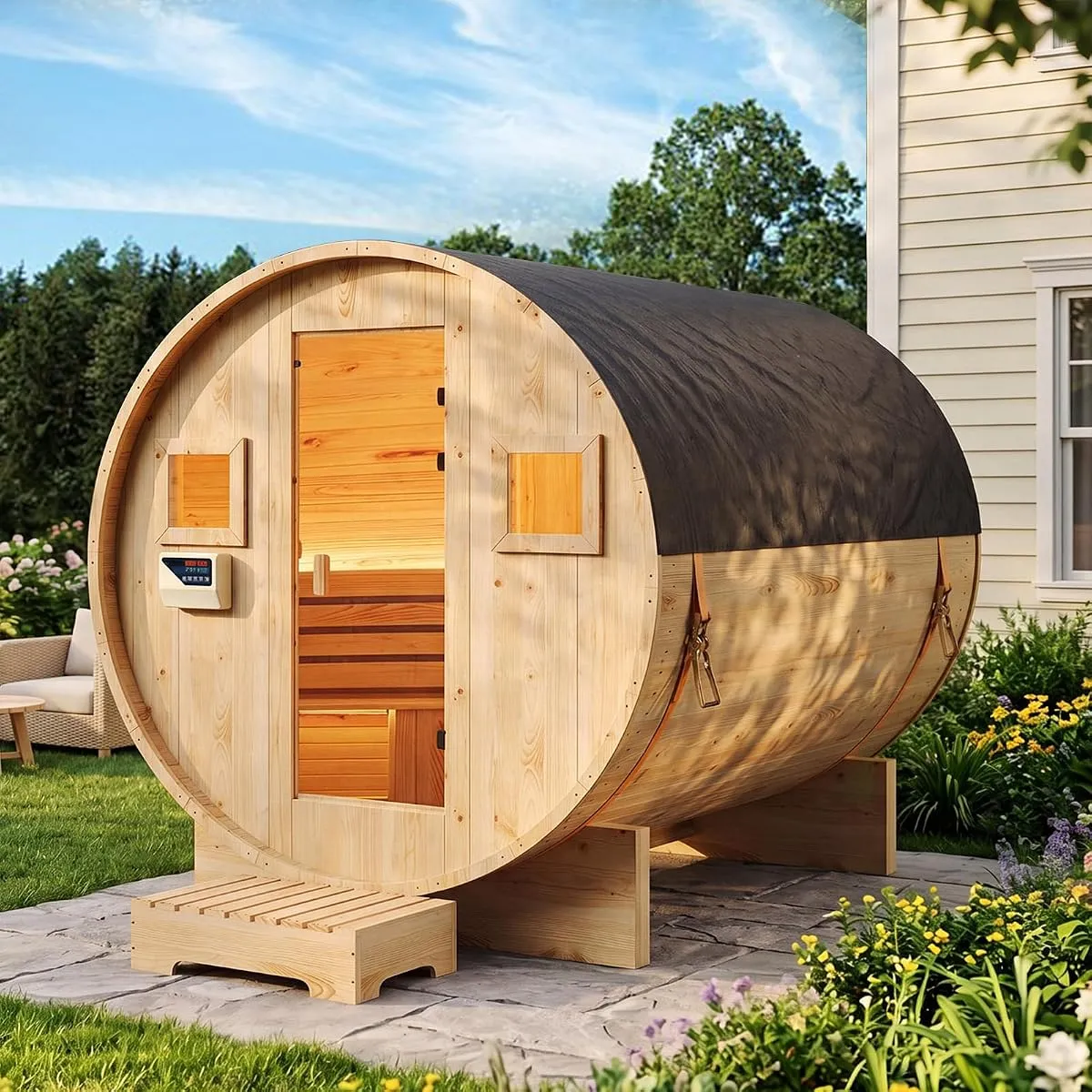
Stage three: fix the hot side. This is the expensive half. A cedar barrel or cabin sauna is a several thousand dollar purchase and a permanent installation.
Doing it in that order means you never spend big on something you turn out not to use, and the cheap version tells you what size and layout you actually want.
Practical notes
Space. A barrel sauna needs a level pad and clearance. The plunge needs to be close enough that you are not walking far wet, but not so close that sauna heat fights your chiller.
Power. A traditional sauna heater is a significant electrical load, often requiring dedicated wiring. Add a chiller and you have two substantial loads outdoors. Get an electrician involved before you buy, not after.
Hydration. Three sauna rounds is 45 minutes of heat and a lot of sweat. Drink between rounds, not just after.
Surfaces. Wet feet, cold, moving between two places in a hurry. Put down something with grip before you slip on decking.
Safety
This combination loads your cardiovascular system harder than either half alone, because you are swinging between full vasodilation and full vasoconstriction repeatedly.
If you have a heart condition, blood pressure issues, or you are pregnant, talk to a doctor about the combination specifically. Never do it after drinking, and do not sauna alone if you are new to heat.
We are not doctors and none of this is medical advice.
Common questions
Sauna or cold plunge first?
Sauna first. It is more comfortable, and cold water is far easier to face from a warm body. The only reason to plunge first is if you are using cold to wake up before a session rather than as part of a contrast protocol.
How long in each?
10 to 15 minutes in the sauna, then 1 to 3 minutes in the cold. Repeat two to four times. The cold phase is shorter than a standalone plunge because you will be doing it repeatedly.
Should I end on hot or cold?
End cold for alertness and mood, which is what most people want in the morning. End hot if you are doing this in the evening and want to sleep.
How hot should the sauna be?
A traditional sauna runs 175 to 195 degrees Fahrenheit. Infrared cabins run much cooler, around 120 to 150, and take longer to make you sweat. Both work for contrast; infrared is gentler and slower.
Do I need a real sauna or will a tent do?
A portable sauna tent produces heat and sweat and is a legitimate way to start. What it does not give you is a space you want to sit in, which matters for a 45 minute session you repeat weekly. Most people who stick with this end up wanting a cabin.
How much does a sauna and plunge setup cost?
A portable sauna tent and a cheap inflatable tub gets you started for a few hundred. A cedar barrel sauna and a chilled tub is a several thousand dollar installation. The gap is comfort and permanence, not whether it works.

Written by
Jed Callahan
Editor, Cold Plunge Daddy
I have spent more nights than I want to admit doing math on ice bath listings to find out whether the gallon number is a lie. It usually is. I have been in some of this gear and not all of it, and I always tell you which. I am not a doctor, and I am not going to pretend cold water fixed my life.
- Catching bad spec sheets
- Chiller sizing and power draw
- Warranty and return terms
- What a tub costs to run