
A cold plunge tub costs anywhere from under a hundred dollars to well over ten thousand. That range is useless on its own, so this page breaks it into the four things you actually pay for.
The purchase price is the part everybody looks at and the part that matters least over a couple of years. Ice, electricity and water treatment are where the money quietly goes.
We track prices rather than publish them, because they move weekly. What follows is bands and running costs, not a price list that will be wrong next month.
The four things you pay for
Purchase price, cooling, water, and power. Most buying advice covers only the first.
1. The tub
Prices move constantly so we work in bands rather than numbers.
Under $300. Soft sided inflatable tubs. Some are single wall, some are insulated, and the difference matters more than the price gap between them. This band includes tubs that are genuinely fine and tubs that are bin liners with a zip.
$300 to $800. Larger soft tubs, better construction like drop stitch fabric, and the cheapest tub-and-chiller kits.
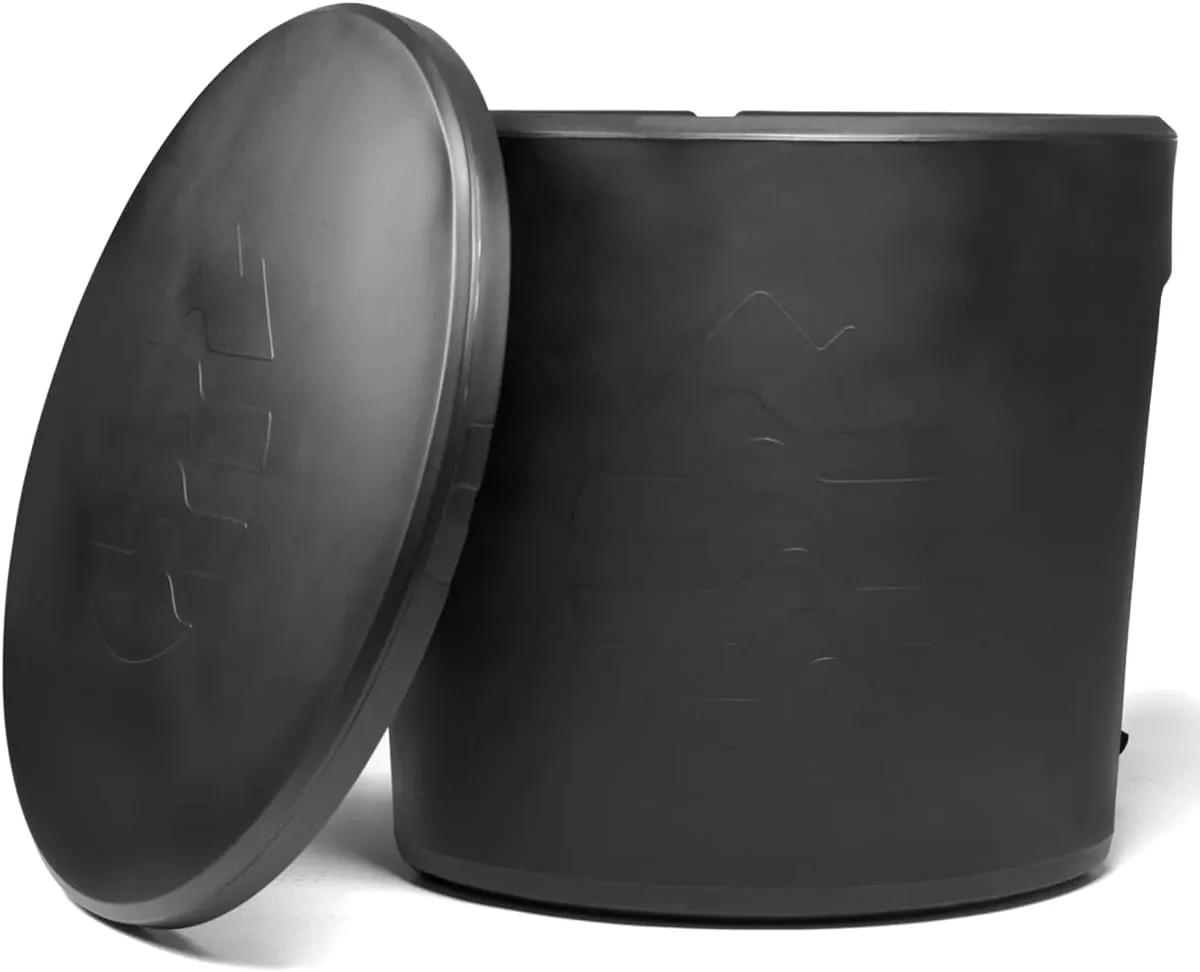
$800 to $2,000. Rigid rotomoulded tubs and insulated barrels that live outdoors permanently, plus mid range chiller bundles.
$2,000 and up. Cedar and premium builds, large capacity tubs, and properly matched high capacity chiller systems.
The honest advice: for a first tub, buy in the lowest band that fits you physically. The most common expensive mistake is buying a permanent installation before knowing whether the habit sticks.
2. Getting the water cold
This is the decision that determines your real cost, and it is a frequency question.
The ice route
Roughly 20 to 40 pounds of ice per 100 gallons to reach the low 50s from typical tap temperature. Uninsulated tubs and warm weather push you to the top of that range.
At four sessions a week and 30 pounds a session, that is about 120 pounds of ice weekly. Multiply by your local price and by 52. For most people the annual figure is larger than they expect, and larger than a mid range chiller.
The chiller route
Expensive once, then close to free. Buy it sized to your tub: a 1/3 HP unit for a standard 80 to 100 gallon tub, more for anything bigger. Our chiller guide covers sizing properly, because buying the wrong size is the common error.
The crossover
Around three to four sessions a week. Below that, ice is genuinely cheaper. Above it, the chiller pays back inside a year and it also removes the friction of hauling ice, which is the actual reason most people stop plunging.
Be honest about your current frequency, not your intended one.
3. Water treatment
Small money, easy to forget, and unavoidable if you reuse water.
Without filtration you drain and refill roughly weekly. On a 100 gallon tub that is a modest water bill. On a 216 gallon tub it is not, plus a long refill and a tub out of action while it re-chills.
With a filter and a sanitiser you stretch to several weeks. Budget for the chemicals and for replacement filter cartridges, both consumables.
Ozone or UV units cut this further, and their generator cells are themselves consumables that need periodic replacement. That is a recurring cost rarely mentioned at the point of sale.
4. Power, and the cost nobody plans for
A correctly sized chiller on a covered insulated tub cycles rather than running continuously, so the running cost is modest.
The expensive surprise is the supply. A chiller needs a proper outdoor rated socket near the tub. If you already have one, this costs nothing. If you do not, an electrician installing an outdoor circuit can cost more than the chiller itself.
Check this before you buy anything, because it can change which route makes sense.
The cheapest honest way to start
Your bathtub and a bag of ice.
It costs nothing extra, a standard bathtub holds 40 to 60 gallons so it needs less ice than a dedicated tub, and it answers the only question that matters: will you still be doing this in a month?
Most people who quit do so in the first few weeks. Finding that out for the price of a bag of ice is a much better outcome than finding it out after a chiller install.
Two year cost, roughly
Two illustrative paths, ignoring the tub price which you can look up:
Cheap tub plus ice, four sessions a week. Low upfront, then two years of weekly ice purchases. The ice will substantially exceed the tub price.
Insulated tub plus a correctly sized chiller. Higher upfront, minimal running cost, and one ice load never needed again.
The second is cheaper over two years at that frequency. At one session a week, the first wins easily.
Which is to say: the right answer depends entirely on how often you will actually get in, and that is the number to establish before you spend anything significant.
Where to go next
If you are ready to buy, our tub comparison sorts them by who they suit. If you have already decided you plunge often enough to want a chiller, start with sizing rather than price.
Common questions
What is the cheapest way to cold plunge?
Your own bathtub and bagged ice. It costs nothing extra to start and it tells you whether you will stick with it. The limits are that most bathtubs are too short to get your shoulders under, and you cannot leave one set up.
How much does a decent cold plunge tub cost?
A usable insulated soft sided tub sits under $300. A rigid tub that lives outdoors permanently runs into four figures. A tub with a matched chiller runs from several hundred to several thousand depending on how much water it cools.
How much does a chiller add?
A 1/3 HP unit suitable for a standard home tub is the cheapest entry. Larger units for oversized tubs cost several times that, and ozone or dual temperature models more again.
Is a chiller cheaper than ice long term?
Above roughly three to four sessions a week, yes, usually inside a year. Below that, ice stays cheaper. Work out your real frequency rather than your intended one before deciding.
What does it cost to run a chiller?
A correctly sized chiller on a covered insulated tub cycles rather than running flat out, so the electricity cost is modest. An undersized chiller on an uncovered tub runs continuously and never wins, which is where the bills come from.
What costs do people forget?
Water treatment, filter replacements, the cost of refilling a large tub, and a proper outdoor electrical supply if you add a chiller. That last one can cost more than the chiller if the circuit is not already there.

Written by
Jed Callahan
Editor, Cold Plunge Daddy
I have spent more nights than I want to admit doing math on ice bath listings to find out whether the gallon number is a lie. It usually is. I have been in some of this gear and not all of it, and I always tell you which. I am not a doctor, and I am not going to pretend cold water fixed my life.
- Catching bad spec sheets
- Chiller sizing and power draw
- Warranty and return terms
- What a tub costs to run