
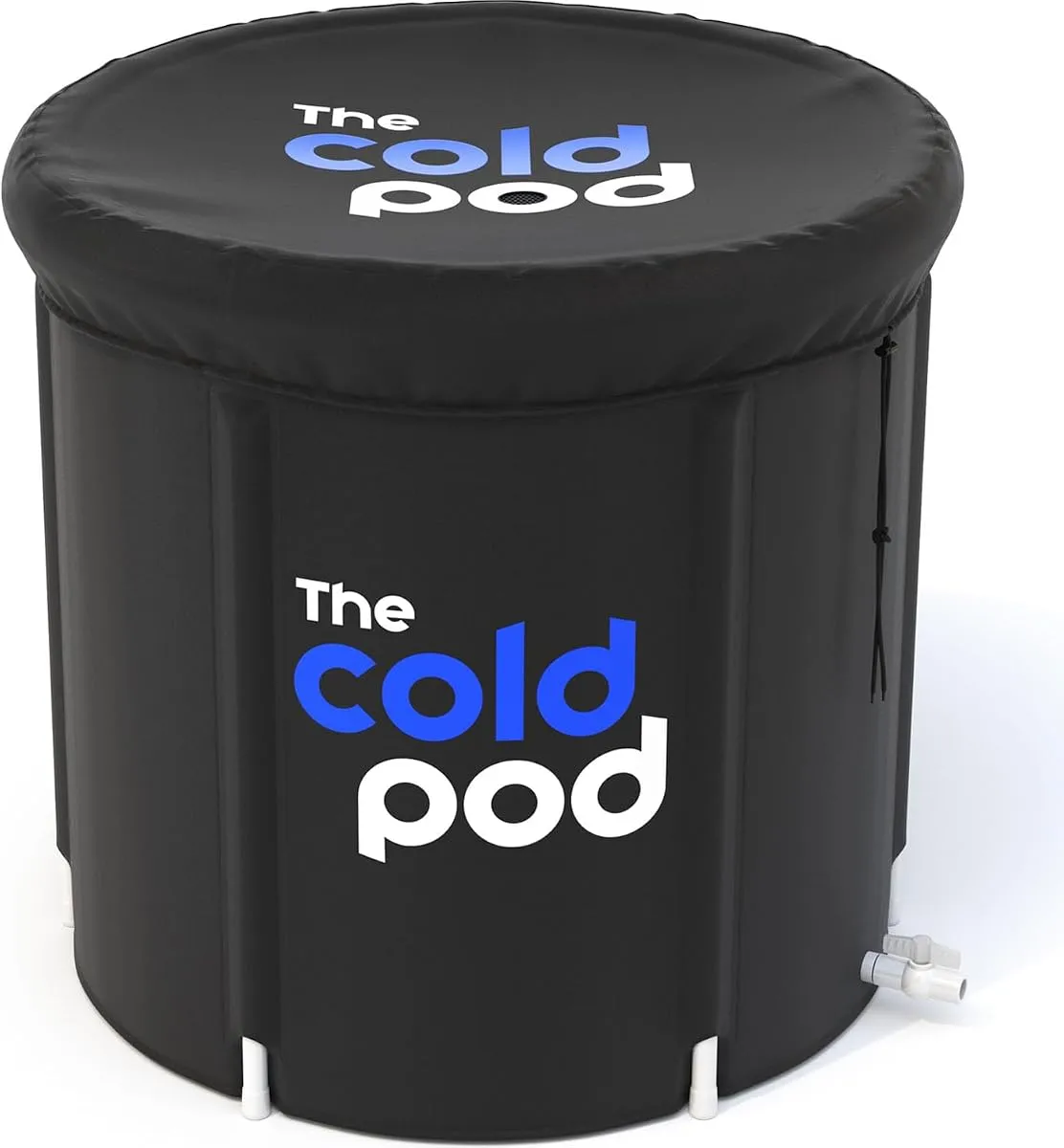
There are four realistic ways to buy a cold plunge, and they differ less on price than people expect. They differ a lot on returns, on whether you can buy a replacement part in two years, and on whether the listing tells you enough to choose properly.
We earn commission from Amazon links, so treat our view of Amazon with appropriate suspicion. We have tried to be straight about where it is the wrong answer.
This page covers what each channel is genuinely good and bad at.
The four channels
Amazon
Good at: selection, price at the bottom of the market, and parts. It is the only place with every format, and sellers who keep listing the same product also keep stocking valves, covers and patch kits. In two years that matters more than you expect.
Bad at: listing quality, and it is worse than most buyers realise. In building our own catalog we found an inflatable PVC tub listed as stainless steel, another as cast iron, an 84 gallon tub with dimensions of 26 by 9 by 5 inches, and repeated cases of capacity given in litres without saying so.
That is not a reason to avoid Amazon. It is a reason to read listings sceptically and to distrust any spec that does not make physical sense.
Returns are a 30 day window and then the seller’s goodwill, which for an anonymous listing may be nothing.
We link to Amazon and earn commission from it. Bear that in mind, and note that this is the section where we have been most critical.
Warehouse clubs
Good at: returns. Costco’s policy in particular is the strongest consumer protection in this category, and on an unproven product that is worth real money.
Bad at: selection and continuity. A handful of models, rotated seasonally, so the tub you buy may not be listed when you want a matching cover.
Our Costco page covers this in detail.
Direct from the brand
Good at: warranty, support and parts, especially at the premium end. If you are spending four figures on a rigid tub, dealing with the company that made it is usually better than dealing with a marketplace. Brands also tend to publish honest specs, because they are answerable for them.
Bad at: price and comparison. You pay list, and you cannot easily compare against alternatives on the same page. Many cheap tubs have no direct channel at all.
Used
Good at: value, and it is the most underrated option in the category. Rigid rotomoulded and resin tubs are simple objects with almost nothing to fail. People buy them, use them for three months, discover they do not like cold water, and sell at a substantial discount. That is a good deal for you.
Bad at: soft tubs, and this is a firm no. UV degradation is invisible until the tub leaks, and you cannot assess remaining life by looking at it. Buying a used soft sided tub is buying an unknown number of remaining sessions.
What to check on a used rigid tub: the shell for cracks or crazing, especially near the base and around any ports; whether it has been through freezes full; and whether the lid is present, because covers are expensive to replace and often are not.
Where the money actually goes
This is the part that makes channel choice less important than it feels.
A cheap uninsulated tub at 100 gallons needs roughly 20 to 40 pounds of ice per session. At four sessions a week that is around 120 pounds weekly. Price it locally and multiply by 52.
For most people, a year of ice costs more than the difference between the cheapest and dearest channel for the same tub. Two years of it often exceeds the price of the tub itself.
So: choose on insulation, size and whether a cover is included. Then choose the channel. Doing it in the other order is how people optimise a $40 saving while signing up for a $600 annual ice bill. The cost breakdown has the full arithmetic.
What to verify before buying, anywhere
Four checks, in order.
- Is a cover included? If the listing does not clearly say, assume not and add its price. An uncovered tub loses cold overnight and doubles your ice use.
- Internal depth against your seated shoulder height. Sit on the floor with a straight back and measure floor to shoulder. That is the water depth you need. Gallons will not tell you this.
- Do the specs make sense? A 135 gallon tub is not 12 inches tall. An inflatable is not cast iron. If one spec is impossible, distrust the rest of the listing.
- Can you buy a part in two years? Valves and covers fail. A seller who has been listing the same product for years will have spares; a listing that appeared last month may not exist next year.
Our honest summary
First tub, unsure whether you will stick with it: a warehouse club for the return policy, or a cheap Amazon tub you will not mind replacing.
Committed, want it to last: direct from the brand for a rigid tub, or Amazon if the brand has no direct channel and you want parts availability.
Best value overall: a used rigid tub from someone who gave up. Check the shell for cracks and confirm the lid is included.
Never: a used soft sided tub.
Once you know which channel, our tub comparison covers which tub suits which person.
Common questions
Where is the cheapest place to buy a cold plunge?
Amazon at the bottom of the market, because that is where the unbranded soft tubs live. But the cheapest tub to buy is often the most expensive to own once you count ice, so the channel matters less than the insulation.
Should I buy direct from the brand?
For premium tubs, often yes. Direct usually means better warranty handling, real support and access to parts. For cheap tubs there is frequently no direct channel at all.
Is it safe to buy a used cold plunge?
A rigid tub, yes, and it is the best value in the whole category. A soft sided tub, no: UV degradation is invisible until it leaks and you cannot assess it by looking.
What about buying a chiller separately?
Fine and often cheaper, as long as you match the gallon rating to your tub and the pump flow rate to the chiller. If you would rather not, buy a matched system from one seller.
Does Amazon have the best selection?
By a wide margin, and that is its main advantage. It also has the worst listing quality: impossible materials, carton dimensions passed off as tub dimensions, and missing capacities are all common.
What should I check before buying anywhere?
Whether a cover is included, the internal depth against your seated shoulder height, and whether the specs are internally consistent. If a listing cannot tell you what the tub is made of, treat everything else on it with caution.

Written by
Jed Callahan
Editor, Cold Plunge Daddy
I have spent more nights than I want to admit doing math on ice bath listings to find out whether the gallon number is a lie. It usually is. I have been in some of this gear and not all of it, and I always tell you which. I am not a doctor, and I am not going to pretend cold water fixed my life.
- Catching bad spec sheets
- Chiller sizing and power draw
- Warranty and return terms
- What a tub costs to run